

Blog
Synthetic Cathinones Explained: Chemistry, Classification, and Research Context – Chemzaro
Oct
Synthetic cathinones are a broad group of synthetic compounds characterized by chemical structures related to cathinone, a naturally occurring stimulant compound found in the khat plant. Over the past several decades, researchers have encountered numerous synthetic cathinone analogues with different substitutions and molecular configurations.
Understanding synthetic cathinones requires more than knowing their names. Their molecular structures, functional groups, substitutions, and physicochemical characteristics can all influence how individual compounds behave chemically and pharmacologically.
One compound discussed within this broader chemical context is Methoxy-Methylone (2-A1MP), which has also been referred to as βk-MMDMA in some sources. Its structure illustrates how relatively small changes to an aromatic ring can distinguish one synthetic compound from another.
This article provides a general chemistry-focused overview of synthetic cathinones, their structural characteristics, terminology, and the importance of analytical identification.
What Are Synthetic Cathinones?
Synthetic cathinones are synthetic compounds based on the molecular framework of cathinone. From a structural chemistry perspective, cathinone belongs to a family of β-keto phenethylamines, meaning that its molecular framework contains both an aromatic phenyl component and a ketone group at the beta position relative to the amine.
The term synthetic cathinone therefore describes a chemical family rather than one individual substance.
Different members of the group can contain modifications to their aromatic rings, nitrogen substituents, or other portions of the molecular structure. These modifications can produce compounds with substantially different chemical and biological characteristics.
For this reason, it is important not to assume that two compounds are interchangeable simply because they belong to the same broad chemical class.
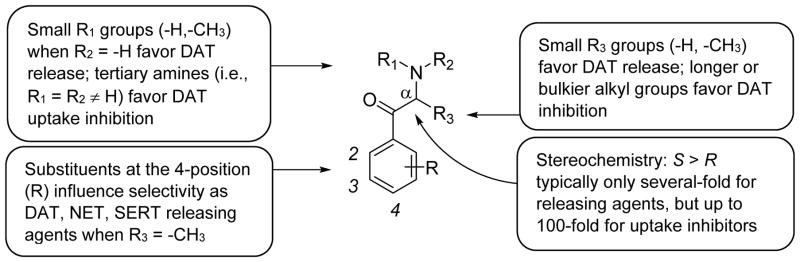
Understanding the Cathinone Chemical Structure
A useful starting point for understanding cathinone chemistry is the basic molecular framework.
Cathinone-related compounds generally contain several important structural components:
- An aromatic ring
- A carbonyl or ketone group
- An aliphatic carbon framework
- An amine-containing portion of the molecule
The exact arrangement and substitution of these components determine the identity of a particular compound.
Changes to the aromatic ring can be especially important. Substituents such as methoxy groups can alter the molecular formula, polarity, electronic characteristics, and other physicochemical properties.
Similarly, changes to the nitrogen-containing portion of the molecule can produce another distinct chemical analogue.
Consequently, identifying a compound solely from a common name or abbreviation can be unreliable. The underlying molecular structure should always be considered.
What Is a Beta-Ketone?
The beta-ketone terminology is important when discussing synthetic cathinones.
A ketone is an organic functional group containing a carbonyl group, in which a carbon atom is double-bonded to oxygen. In a β-keto compound, the ketone is positioned at a specific location relative to another functional group within the molecular framework.
Cathinone is characterized by this beta-ketone arrangement.
The beta-ketone feature is also reflected in alternative terminology used for some cathinone-related compounds. For example, the abbreviation βk is sometimes used to indicate a beta-ketone analogue.
This terminology helps distinguish cathinones from structurally related compounds that do not contain the same ketone arrangement.
What Is Methoxy-Methylone (2-A1MP)?
Methoxy-Methylone (2-A1MP) is a synthetic compound associated with the substituted cathinone family. Some sources also use the designation βk-MMDMA.
A reported IUPAC name is:
1-(7-methoxy-benzo[1,3]dioxol-5-yl)-2-methylamino-propan-1-one
The terminology surrounding this compound can vary between sources, which makes structural identification particularly important.
Rather than relying exclusively on names such as 2-A1MP or βk-MMDMA, researchers should compare chemical identifiers, molecular structures, analytical data, and authoritative reference information when accurate identification is required.
For a dedicated overview, see the Methoxy-Methylone (2-A1MP) chemical structure and properties guide.
Methoxy-Methylone Chemical Structure
The molecular structure of Methoxy-Methylone contains several features that help distinguish it from other related compounds.
One notable feature is the presence of a methoxy group associated with the aromatic portion of the molecule.
A methoxy group consists of a methyl group attached to an oxygen atom that is itself connected to another part of the molecular structure. In organic chemistry, methoxy substitution can influence electronic characteristics and other physicochemical properties.
In Methoxy-Methylone, this structural feature is relevant when comparing the compound with related cathinones.
The complete molecular structure should nevertheless be considered rather than focusing on one substituent in isolation.
What Is a Methoxy Group?
A methoxy group is commonly represented as –OCH₃.
It is an oxygen-containing functional group frequently encountered in organic and medicinal chemistry.
Methoxy groups can occur on aromatic rings and other molecular structures. Their presence can affect characteristics such as molecular polarity, electron distribution, hydrogen-bonding behavior, and overall molecular interactions.
For this reason, adding or removing a methoxy group can create a chemically distinct compound even when the remainder of the molecular framework remains similar.
In the context of Methoxy-Methylone, the methoxy substitution is one of the structural characteristics used to distinguish the compound from related substances.
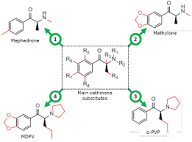
Methoxy-Methylone vs Methylone
Methoxy-Methylone and methylone are chemically related but should not be treated as identical substances.
Both compounds belong to the broader family of synthetic cathinone-related structures, but differences in their molecular substitutions distinguish them.
The commonly described structural distinction involves the aromatic portion of the molecule and the presence of an additional methoxy substitution in Methoxy-Methylone.
This illustrates an important principle in organic chemistry: structural similarity does not necessarily mean chemical equivalence.
Two molecules can share a substantial portion of their molecular framework while differing in their physicochemical characteristics, metabolism, biological activity, toxicity, or other properties.
Therefore, comparisons should be based on verified molecular structures and experimental evidence rather than names alone.
Why Chemical Structure Matters
Chemical structure is one of the most important factors in understanding a synthetic compound.
A molecule’s structure determines characteristics such as:
- Molecular weight
- Functional groups
- Hydrogen-bonding characteristics
- Polarity
- Solubility
- Chemical reactivity
- Potential metabolic pathways
- Interaction with biological systems
Even a relatively small modification can change these characteristics.
For example, changing a substituent on an aromatic ring can affect electron distribution and molecular interactions. Similarly, modifications to an amine-containing portion can alter the overall physical and chemical behavior of a compound.
This is why chemical databases and research literature generally rely on structures, molecular formulas, CAS identifiers where available, and analytical measurements rather than informal names alone.
Reported Physicochemical Properties
Some computational chemistry resources have been used to estimate physicochemical properties for compounds in this chemical family.
Reported predictions associated with Methoxy-Methylone have included approximately four hydrogen-bond acceptors and three freely rotatable bonds.
Other reported computational estimates include a refractive index around 1.547, surface tension of approximately 45.5 ± 3.0 dyne/cm, a predicted flash point of approximately 165.5 ± 27.9 °C, and an estimated boiling point of approximately 350.1 ± 42.0 °C at 760 mmHg.
These values should be interpreted carefully.
A predicted property is not necessarily an experimentally measured property. Computational chemistry software uses molecular structure and mathematical models to estimate characteristics that may otherwise require laboratory measurement.
Consequently, predicted values should be clearly labeled as predictions rather than presented as confirmed experimental data.
Computational Chemistry and Property Prediction
Computational chemistry plays an increasingly important role in chemical research.
Software platforms can use molecular structures to estimate a wide variety of characteristics. Depending on the software and model, these may include:
- Molecular descriptors
- Hydrogen-bond donors and acceptors
- Molecular weight
- LogP or related partition coefficients
- Polar surface area
- Boiling-point estimates
- Melting-point estimates
- Other physicochemical characteristics
Such calculations can be useful for research and comparison.
However, computational predictions have limitations. Different algorithms can produce different estimates, and the reliability of a prediction depends on the model, molecular structure, training data, and property being estimated.
For that reason, computational results are best considered alongside experimental analytical data.
ACD/Labs and ChemAxon
ACD/Labs and ChemAxon are examples of chemistry software ecosystems used for molecular analysis and chemical information management.
Tools of this type can assist researchers with molecular structures, chemical property calculations, visualization, database management, and other analytical tasks.
When information about a compound is generated computationally, researchers should distinguish between:
- A theoretical prediction
- A calculated molecular descriptor
- An experimentally measured value
- A value reported by a third-party source
These categories are not interchangeable.
For scientific accuracy, clearly labeling the source and nature of a chemical value makes the information more useful and credible.
Why Chemical Identification Matters
Accurate chemical identification is particularly important when working with research chemicals.
Names and abbreviations can sometimes be inconsistent across websites, databases, publications, and informal discussions.
A single abbreviation may be used incorrectly, while different names may refer to similar or completely different molecular structures.
A robust identification process should therefore consider multiple pieces of information, such as:
- Molecular structure
- Molecular formula
- Molecular weight
- IUPAC nomenclature
- CAS number when available
- Analytical reference data
- Spectroscopic information
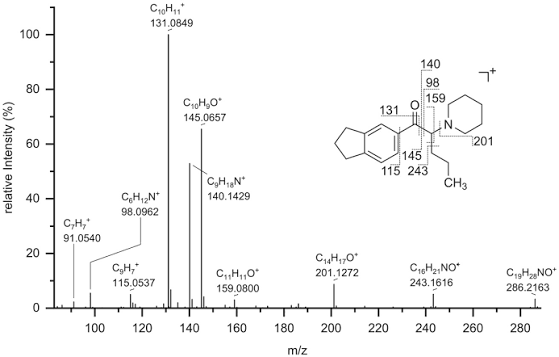
- Mass spectrometry
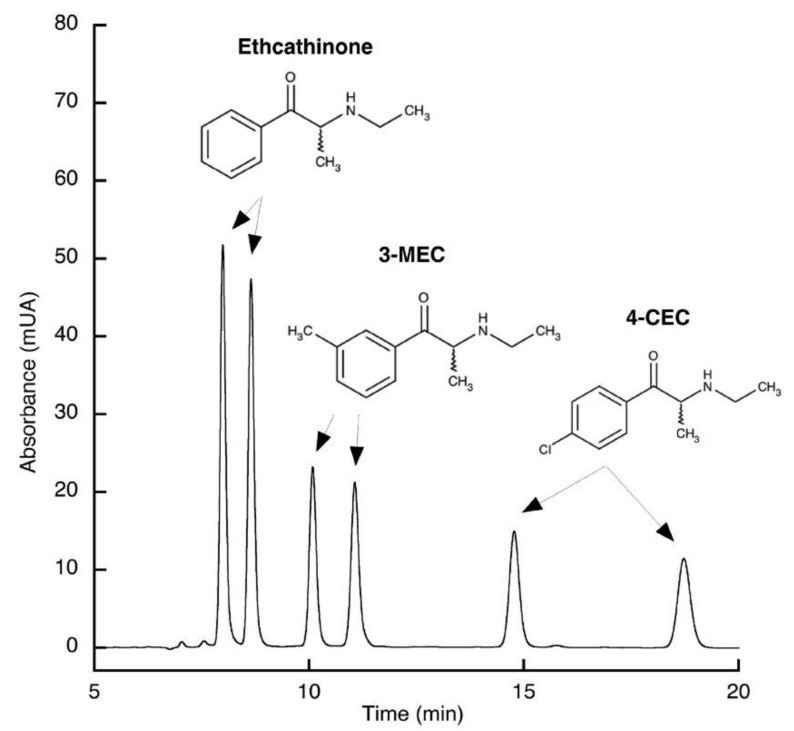
- Chromatographic data
Analytical techniques such as mass spectrometry and nuclear magnetic resonance spectroscopy can provide substantially more reliable identification than relying on a product description alone.
Synthetic Cathinones and Scientific Research
Research into synthetic cathinones spans several disciplines.
Chemists may study their molecular structures and reactivity. Analytical scientists may develop methods for detecting and identifying compounds. Pharmacologists and toxicologists may investigate biological effects, metabolism, and potential risks.
Public-health researchers may examine patterns of exposure and associated health outcomes.
Because these disciplines answer different questions, information from one area should not automatically be interpreted as evidence for another.
For example, knowing a molecule’s chemical structure does not by itself establish its safety profile.
Likewise, a computational prediction of a physicochemical property does not demonstrate how a compound behaves in a human biological system.
Safety and Research Limitations
Information about many newer synthetic compounds can be limited.
A compound may have a well-described chemical structure while having relatively little peer-reviewed information concerning its toxicology, metabolism, pharmacology, or long-term effects.
This distinction is especially important when discussing synthetic cathinones.
Chemical similarity to another compound should not be treated as proof that the two substances have identical effects or risks.
Researchers should consult current scientific literature, authoritative databases, analytical references, and applicable regulatory information when evaluating an unfamiliar compound.
Frequently Asked Questions
What are synthetic cathinones?
Synthetic cathinones are a broad class of synthetic compounds structurally related to cathinone. They can contain different substitutions that produce distinct molecular and physicochemical characteristics.
What is Methoxy-Methylone?
Methoxy-Methylone is a synthetic compound associated with the substituted cathinone family. It has also been described using identifiers such as 2-A1MP and βk-MMDMA in some sources.
What is 2-A1MP?
2-A1MP is a name used by some sources for Methoxy-Methylone. Because chemical naming conventions can vary, the molecular structure should be checked when precise identification is important.
What is βk-MMDMA?
βk-MMDMA is another designation associated with Methoxy-Methylone in some chemical references. The βk terminology refers to the beta-ketone structural feature characteristic of cathinone-related compounds.
What is a methoxy group?
A methoxy group is an organic functional group represented as –OCH₃. It consists of a methyl group connected to oxygen and can occur as a substituent on aromatic and other molecular structures.
Is Methoxy-Methylone the same as methylone?
No. Although they have related chemical frameworks, they are distinct compounds with different molecular structures.
Why are chemical names sometimes inconsistent?
Chemical compounds can have systematic IUPAC names, common names, abbreviations, research identifiers, and historical names. Informal sources may also use terminology inconsistently. Comparing the underlying molecular structure is therefore important.
Are predicted chemical properties experimentally confirmed?
Not necessarily. Computational chemistry can provide useful estimates, but predicted values should not be presented as experimental measurements unless they have been independently verified through laboratory testing.
How are synthetic cathinones identified?
Depending on the research context, identification can involve molecular structure analysis, chromatography, mass spectrometry, nuclear magnetic resonance spectroscopy, and comparison with authenticated reference standards.
Conclusion
Synthetic cathinones represent a chemically diverse family of compounds built around structural features associated with cathinone. Understanding these compounds requires attention to molecular structure, functional groups, nomenclature, physicochemical properties, and analytical identification.
Methoxy-Methylone (2-A1MP) provides an example of how structural modifications can distinguish one cathinone-related compound from another. Its reported methoxy substitution and beta-ketone framework are useful concepts for understanding the broader chemistry of substituted cathinones.
When researching Methoxy-Methylone or related compounds, it is important to distinguish between chemical predictions and experimentally verified measurements. Names and abbreviations should also be checked against molecular structures and reliable analytical information.
For a more detailed examination of the compound itself, readers can explore the Methoxy-Methylone (2-A1MP) chemical structure, properties, and research overview. Learn more about RC from Chemzaro.
